Pool Renovation Ideas That Instantly Boost Home Value

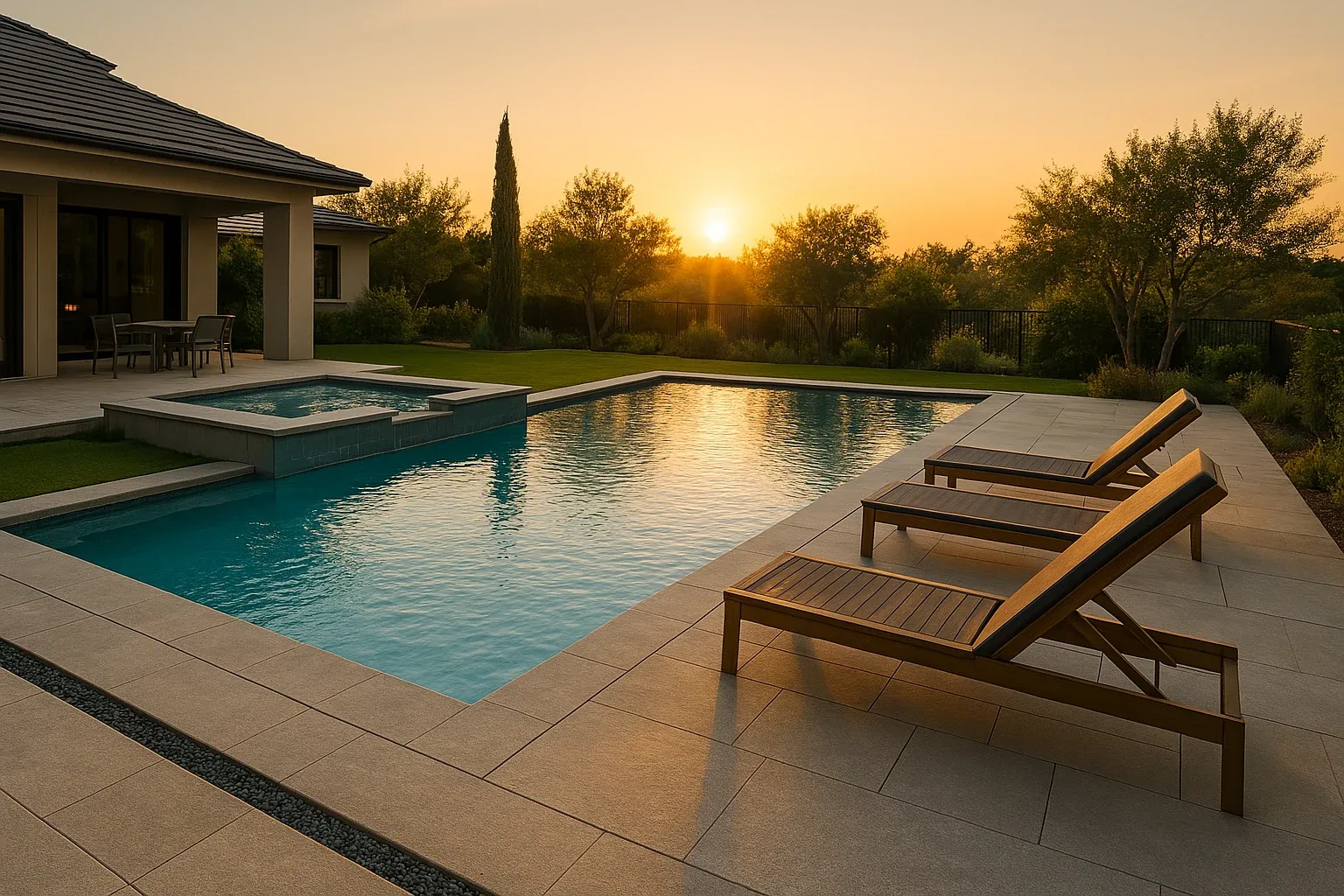
If your pool looks dated, worn, or simply underwhelming, the problem isn’t the pool — it’s that it hasn’t kept up with the rest of your home. In Northern Virginia, Maryland, and Washington, DC, where outdoor living spaces are a major factor in home desirability, a well-renovated pool can be one of the highest-ROI improvements you make. The question isn’t whether to renovate. It’s which upgrades deliver the most value for your specific situation.
This guide breaks down the most impactful pool renovation ideas — from quick cosmetic wins to full equipment overhauls — and explains what actually moves the needle for resale value versus what’s purely aesthetic. Whether you’re preparing to list your home or just want to maximize enjoyment of your backyard, there’s a path that makes sense for your budget.
How Much Does a Pool Renovation Add to Home Value?
According to the National Association of Realtors and the Appraisal Institute, a well-maintained inground pool in the Mid-Atlantic region typically adds between $10,000 and $30,000 to a property’s appraised value — roughly 5–8% of the home’s total value depending on neighborhood and price tier. The caveat: a neglected, outdated, or visually unappealing pool can actually hurt resale by introducing a perceived maintenance burden.
This is why renovation matters. A pool that looks sharp, runs efficiently, and requires minimal buyer overhead consistently outperforms one that appears to need work. In the competitive DMV real estate market — particularly in Fairfax County, Montgomery County, and Northern Virginia suburbs — buyers at the $700K+ tier expect outdoor spaces to feel complete, not like a project.
The most value-positive renovations are those that improve both appearance and operational reliability. Purely cosmetic upgrades matter less if buyers worry about the equipment underneath. The ideal renovation addresses both.
1. Resurface Your Pool for a Fresh Look
Pool resurfacing is the single most impactful renovation for aging concrete or plaster pools. Faded, stained, or pitted surfaces immediately signal “this pool is old” to prospective buyers — and to you, every time you look at it. Resurfacing resets that impression entirely.
Modern finish options go well beyond basic white plaster:
- Quartz aggregate: Durable, mold-resistant, available in a range of earth tones and blues. The most popular choice in the DMV area. Expect $6,000–$10,000 for an average-size residential pool.
- Pebble (PebbleTec/PebbleSheen): Textured, natural look with exceptional durability. Slightly more expensive ($9,000–$15,000) but lasts 20–25 years with proper care.
- Glass bead finishes: Adds shimmer and depth to the water. Often used to modernize pools that previously had flat plaster finishes.
A resurfacing project typically takes 3–5 days and requires keeping the pool out of service for 2 weeks while the finish cures. Plan it for fall or winter to avoid losing swim season.
2. Upgrade Your Pool Lighting
Lighting is the highest ROI pool renovation on a dollar-per-visual-impact basis. Old incandescent or halogen underwater lights produce a flat, yellow glow. Modern LED systems transform the pool into an experience — and they cost dramatically less to operate.
A standard LED light retrofit runs $300–$600 per fixture, including installation. For most residential pools, 2–4 fixtures total is typical. Color-changing LED systems (controllable via app or controller) cost a bit more but create the resort ambiance that photographs well in listings and impresses during showings.
Beyond the pool itself, consider low-voltage deck lighting along the pool perimeter and in landscaping beds. This extends the visual footprint of your outdoor space and makes the backyard usable — and impressive — after sunset.
3. Replace Coping and Tile for a Modern Finish
Pool coping (the material capping the pool shell edge) and waterline tile are among the most visible elements of a pool’s condition. Cracked, discolored, or outdated coping and tile draw the eye immediately — in the wrong way. Replacing them creates a visual reset that frames the entire pool differently.
Popular coping choices in the DMV market include:
- Travertine: Light, elegant, and heat-resistant. Pairs well with quartz finish surfaces and gives a Mediterranean resort feel.
- Bullnose concrete: Clean, modern edge profile at a lower price point. Works well with geometric pool shapes.
- Natural bluestone: Classic choice for traditional and transitional home styles common in Maryland and Virginia.
Waterline tile is typically replaced as part of a resurfacing project, but it can also be updated independently. Contemporary choices include glass tile, mosaic designs, or simple ceramic in neutral tones. Budget $1,500–$4,000 for coping replacement on a standard pool; tile work varies by linear footage.
4. Remodel or Expand the Pool Deck
The deck is the frame around the painting. A dated, cracked, or mismatched deck undermines the visual impact of every other improvement. Conversely, a well-executed deck renovation makes a modest pool look significantly more upscale.
Options range from budget-conscious to premium:
- Concrete resurfacing with texture or stamp pattern: A cost-effective way to update an existing concrete deck. Kool Deck and similar products can also reduce surface temps — a meaningful comfort upgrade in Virginia summers.
- Pavers (travertine, bluestone, concrete): More expensive upfront but durable, reparable, and high-value visually. Individual pavers can be replaced if cracked; a poured slab must be patched.
- Expansion: If your current deck is minimal, adding square footage — including built-in seating, a lounging ledge, or a designated area for a future outdoor kitchen — dramatically increases usable outdoor space and perceived value.
Deck redesigns typically run $8,000–$25,000 depending on scope, material, and whether expansion is involved. This is one area where investing in quality materials pays long-term dividends.
5. Add Eye-Catching Water Features
Water features — waterfalls, deck jets, bubblers, scuppers — add motion, sound, and a clear luxury signal to your pool. They’re among the features buyers consistently comment on in showings, and they make outdoor spaces feel finished rather than functional.
- Deck jets: Laminar streams that arc out of the deck and into the pool. Elegant, subtle, and highly photogenic. Installation cost: $500–$1,500 each.
- Sheer descent waterfalls: A thin, smooth curtain of water cascading into the pool from a raised retaining wall or elevated deck. Creates a striking visual and pleasant sound.
- Rock waterfall features: Natural-looking, built with stacked stone or artificial rock. Higher installation cost ($5,000–$15,000) but very effective for lagoon-style or naturalistic designs.
- Bubblers: Small fountains installed in tanning ledges or shallow areas. Popular for families with young children.
Water features can be added to existing pool plumbing if there’s sufficient pump capacity. A hydraulics assessment is part of any reputable renovation proposal.
6. Install Pool Automation and Smart Features
Modern pool automation systems allow homeowners to control temperature, lighting, sanitization schedules, and water features from a smartphone. Brands like Pentair IntelliConnect, Hayward OmniLogic, and Jandy iAquaLink are the standard for new builds and renovations across Northern Virginia and Maryland.
For buyers — particularly younger families at the $700K–$1.2M price point that dominates the DMV market — app-controlled pool systems are increasingly an expectation, not a luxury. The ability to preheat the pool before leaving work, or confirm the cover is closed without going outside, resonates strongly with convenience-oriented buyers.
Automation retrofit cost: $1,500–$3,500 depending on existing equipment compatibility. If you’re replacing the pump or heater anyway, bundling automation into that project typically reduces installation labor.
7. Upgrade to Energy-Efficient Equipment
Since 2021, federal law (the DOE variable-speed pump mandate) requires that most new residential pool pump installations use variable-speed motors. If your pool still has a single-speed pump, you’re running an inefficient system that costs significantly more to operate — and that many buyers will flag as an immediate replacement item.
Key equipment upgrades worth considering:
- Variable-speed pump: Reduces energy consumption by up to 90% compared to single-speed models. Typical payback period: 1–3 years in energy savings. Cost: $800–$1,800 installed.
- Heat pump heater: Efficient alternative to gas heaters in the DMV climate. COPs of 5:1–6:1 mean $1 of electricity produces $5–$6 of heat. Cost: $3,000–$5,000 installed.
- Cartridge or DE filter: If your pool still uses a sand filter older than 15 years, a cartridge filter upgrade improves water clarity and reduces backwash water waste.
- Salt chlorine generator (SWG): Eliminates the need for chlorine tablets by generating chlorine from dissolved salt. Pool water quality is notably better; maintenance is simpler. Cost: $1,500–$3,000 installed.
What Today’s Buyers Are Looking For
Based on buyer behavior in the Virginia, Maryland, and DC market, the pool features that consistently generate positive buyer reactions are:
- Automatic safety cover — safety-conscious buyers, especially families with young children, place enormous value on this. It also communicates that the pool has been maintained responsibly.
- Clean, modern surface and coping — visual condition is assessed in the first 30 seconds. Stained plaster or cracked coping triggers immediate doubt about the rest of the mechanical condition.
- Working automation system — buyers don’t want to inherit a pool they have to “figure out.”
- Evidence of maintenance history — service records, clean equipment pads, properly sized and functional equipment.
A pool that checks all four boxes commands a price premium. One that checks none can actually become a negotiating liability.
Frequently Asked Questions
How much does a full pool renovation cost in Virginia or Maryland?
A comprehensive renovation including resurfacing, new coping, deck work, lighting, and equipment upgrades typically runs $20,000–$60,000 depending on scope and materials. Cosmetic-only renovations (resurfacing + lighting + coping) start around $12,000–$20,000.
Does a pool renovation increase home value enough to be worth it?
In the DMV area, a well-renovated pool adds $15,000–$30,000 to appraised value, and significantly reduces negotiation friction with buyers. Renovation usually improves both sale price and days-on-market outcomes compared to selling an outdated pool as-is.
When is the best time of year to renovate a pool?
Fall and winter are optimal — contractor availability is higher, scheduling is easier, and your pool is already out of service. Completing renovations by February means you’re ready for a full summer. See our article on the best time of year to renovate your pool for more detail.
Can I renovate parts of my pool without doing a full renovation?
Yes. Many homeowners start with a targeted upgrade — resurfacing only, or new lighting + automation — and phase in additional work over time. The key is sequencing properly: surface work should be done before adding water features, and pump upgrades before adding automation.
Ready to Transform Your Pool? Beltway Pools Can Help
Whether you’re preparing to sell, refreshing a pool that’s been neglected, or systematically upgrading an aging system, Beltway Pools has the expertise to guide the right scope of work for your goals and budget. We serve homeowners throughout Virginia, Maryland, and the DC metro area.
Explore our pool renovation services to see what’s possible, or get a free quote today and we’ll assess your pool and walk you through the best options.
Ready to get started?
Beltway Pools serves Maryland, Virginia, and Washington DC.
See our pool renovation servicesKeep Reading
More Articles
- Renovation
What a Full Pool Renovation Includes: From Shell to Swim-Ready
There's a point where patching isn't enough. Learn what a complete pool renovation includes — from shell resurfacing to equipment upgrades — and what it costs in the DMV.
Read article - Renovation
Cracked Pool? Fading Finish? Here's When You Need a Renovation
Cracks, rough finish, and unexplained water loss aren't just eyesores. Learn the key signs your pool needs renovation and why acting early always costs less.
Read article - Renovation
Best Time of Year to Renovate Your Pool
Fall and winter are the smartest seasons to renovate your pool in Virginia and Maryland — better pricing, faster scheduling, and ready for summer.
Read article