How Long Does It Take to Build a Pool?

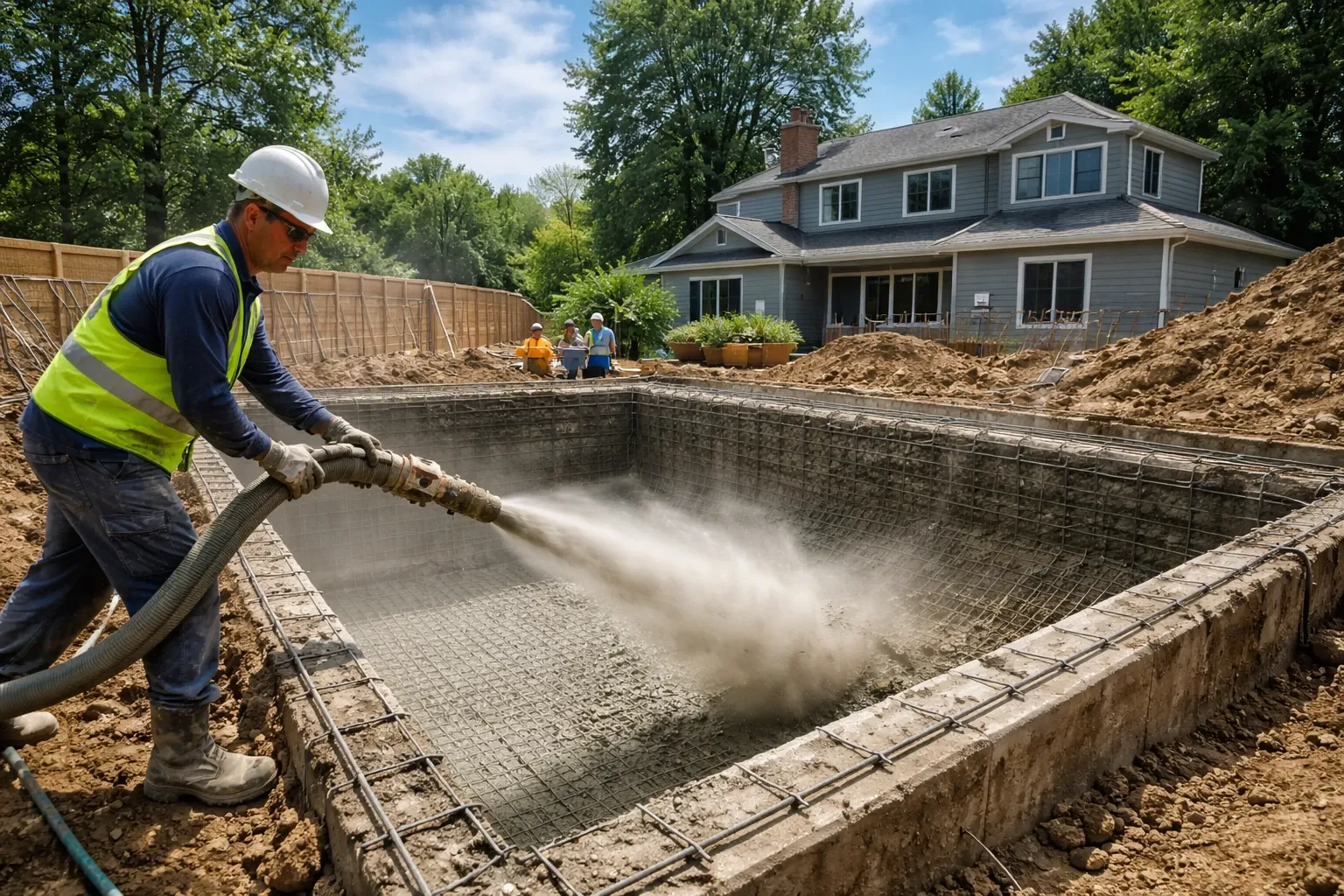
"How long will it take?" is almost always the second question we hear after "How much does it cost?" The honest answer: building an inground pool typically takes 8–16 weeks from contract signing to first swim, depending on the scope of the project, permit timelines in your jurisdiction, and the time of year you start. Here's what actually goes into that window — and where most of the waiting happens.
Phase 1: Design and Contract (1–3 Weeks)
Once you've chosen a contractor and agreed on a design, you'll receive drawings, specifications, and a contract. Review these carefully. Ensure the scope matches your conversations — including shell type, finish material, coping, decking, equipment specifications, and any water features. Changes made before work begins cost nothing; changes made mid-construction can be expensive and time-consuming.
This phase moves as fast as you're ready to move. Homeowners who have done their research and know what they want can reach contract-signing within 1–2 weeks. Those still deciding between gunite and fiberglass, or weighing deck material options, often take longer than the contractor does.
Phase 2: Permits (2–8 Weeks)
Permits are where most of the waiting happens — and it's almost entirely outside your contractor's control. In Virginia and Maryland, pool construction permits are reviewed at the county level. Processing times vary significantly:
- Fairfax County, VA: Typically 3–6 weeks for a residential pool permit.
- Montgomery County, MD: Generally 4–8 weeks, longer during spring when applications peak.
- Prince George's County, MD: 3–6 weeks on average.
- DC: DC pool permits often take 6–10 weeks due to additional zoning review requirements.
One reason to start a pool project in fall or winter: permit applications submitted during the off-season are reviewed faster because volume is lower. A permit submitted in October is often processed well before one submitted in March, even if both projects start actual construction at the same time.
Phase 3: Excavation (1–3 Days)
Once permits are approved, excavation typically begins within 1–2 weeks depending on scheduling. Excavation itself moves quickly — a backhoe can excavate a standard residential pool in a single day. The soil removal and haul-off are coordinated during this phase. If there are unexpected underground obstacles (roots, rocks, old utilities), this can extend by a day or two.
Phase 4: Shell Construction (1–3 Weeks)
For gunite or shotcrete pools — the most common type in the DMV area — the steel rebar framework is installed first (1–2 days), then inspected, then the concrete is sprayed (1 day). After spraying, the shell must cure for a minimum of 28 days before the interior finish is applied, though other work can proceed during this time.
For fiberglass pools, the pre-manufactured shell is delivered and set into the excavation in 1–2 days. The structural phase is faster, but customization options are more limited.
Phase 5: Plumbing and Electrical (3–7 Days)
While the shell cures (or immediately after fiberglass installation), plumbing and electrical rough-in proceeds. This typically requires separate inspections — one for plumbing, one for electrical — which add a few days of waiting for inspector availability. Delays here are common during peak season when inspectors are booked out.
Phase 6: Decking (1–2 Weeks)
Coping installation around the pool edge happens first, then the deck itself. Concrete decks cure for 7–14 days before use. Pavers or natural stone can often be walked on sooner but may take longer to install depending on the pattern and space. Decking is often the most visually transformative phase — this is when the project starts looking like a backyard rather than a construction site.
Phase 7: Interior Finish and Fill (1–2 Weeks)
The final interior plaster or quartz finish is applied, then the pool is immediately filled with water. The startup process — adjusting water chemistry, balancing the surface, and running the system continuously — takes 7–14 days. During this period you cannot swim; the water chemistry is actively curing the surface.
After startup, a final inspection is scheduled. Upon passing, your pool is cleared for use.
Realistic Total Timeline
Putting it together for a standard gunite pool project in Virginia or Maryland:
- Design and contract: 1–3 weeks
- Permitting: 3–8 weeks
- Excavation through shell construction: 2–4 weeks
- Plumbing, electrical, inspections: 2–3 weeks
- Decking: 1–2 weeks
- Finish and startup: 2 weeks
Total: approximately 11–22 weeks, with typical projects landing around 14–16 weeks.
If you want your pool ready for summer, the math is clear: start the process no later than January for a May completion, or February for a June completion. Projects starting in April or May almost never result in a July 4th swim — and trying to rush a pool build creates problems that surface months later.
Ready to get started? Contact Beltway Pools to discuss a timeline that works for your project, or learn more about our pool design and build process.
What Can Delay a Pool Build Timeline
Not every project runs at the expected pace. The most common sources of delay in Virginia and Maryland pool builds:
- Permit processing time: The single biggest variable. Montgomery County and DC can take 8–10 weeks during peak season. Submitting in fall or early winter significantly reduces this wait.
- Material backorders: Specific finish materials (certain quartz colors, custom tile, specialty coping stone) can have 4–6 week lead times. Your contractor should identify long-lead items at contract signing so orders can be placed before construction begins.
- Unexpected underground conditions: Rock, old utility lines, high water tables, or contaminated soil all require modified excavation approaches that add time and cost. A soil assessment before finalizing the design prevents the most serious surprises.
- Inspection scheduling: Electrical and plumbing inspections require inspector availability, which compresses during peak building season (April–August). Projects in northern Virginia counties can see 5–10 day waits for routine inspections during the busiest periods.
- Weather: While concrete and plaster work can proceed in most Maryland and Virginia weather, hard freezes, heavy rain, and extreme heat all require schedule adjustments. Projects that start in fall typically have more weather flexibility than summer projects.
- Homeowner decision delays: Changes to finish materials, deck design, or equipment selections mid-project often add 1–3 weeks. Lock in all selections before work begins.
Frequently Asked Questions
If I want my pool ready for summer, when should I start the process?
To be swimming by Memorial Day (late May): start the design and contract process in October–November so permits are submitted by December–January. To be swimming by July 4th: start design in December–January, permit submission by February. Starting in March or April rarely allows a July 4th swim in Virginia or Maryland.
How long does the pool permit take in Fairfax County vs. Montgomery County?
Fairfax County residential pool permits typically process in 3–6 weeks; faster in winter. Montgomery County takes 4–8 weeks and sometimes longer in spring due to high volume. DC applications frequently take 6–10 weeks due to additional zoning review layers.
Can I speed up the pool build timeline by paying more?
Some elements can be expedited — material selections and order placement, contractor scheduling — but permit processing is almost entirely outside your contractor’s control. The most effective lever is starting earlier in the year, not spending more once the project is underway.
How long after the pool is built before I can swim?
After the interior finish (plaster or quartz) is applied and the pool is filled, a 7–14 day startup period is required during which the water chemistry is actively curing the surface. You cannot swim during this period. After the pool passes final inspection, it’s cleared for use.
Ready to Get Started? Contact Beltway Pools
Understanding the timeline is the first step to planning a pool project that doesn’t leave you scrambling. Beltway Pools builds custom inground pools throughout Virginia, Maryland, and DC, and we give every customer a realistic project timeline at the start — not at the end.
Contact us to discuss a timeline for your project, or explore our pool build and design process to see how we approach each phase.
Ready to get started?
Beltway Pools serves Maryland, Virginia, and Washington DC.
Explore our pool build & design servicesKeep Reading
More Articles
- Build & Design
Pool Automation Systems: What They Do and Why It Matters
Pool automation lets you control your pump, lights, heat, and chemicals from your phone. Here's how it works and whether it's worth installing in the DMV.
Read article - Build & Design
Putting the DMV on the Map: Beltway Pools Achieves Prestigious GENESIS Master Certification
Beltway Pools celebrates a historic milestone: Rob Moore and Dragan Kostadinovic are now the first GENESIS Master Certified pool builders in the entire DMV.
Read article - Build & Design
Why You Should Invest in an Automatic Pool Cover
Automatic pool covers save energy, reduce evaporation, keep debris out, and act as the strongest safety barrier available. Here's what DMV homeowners need to know.
Read article