How to Check Your Pool After a Winter Storm in Virginia or Maryland

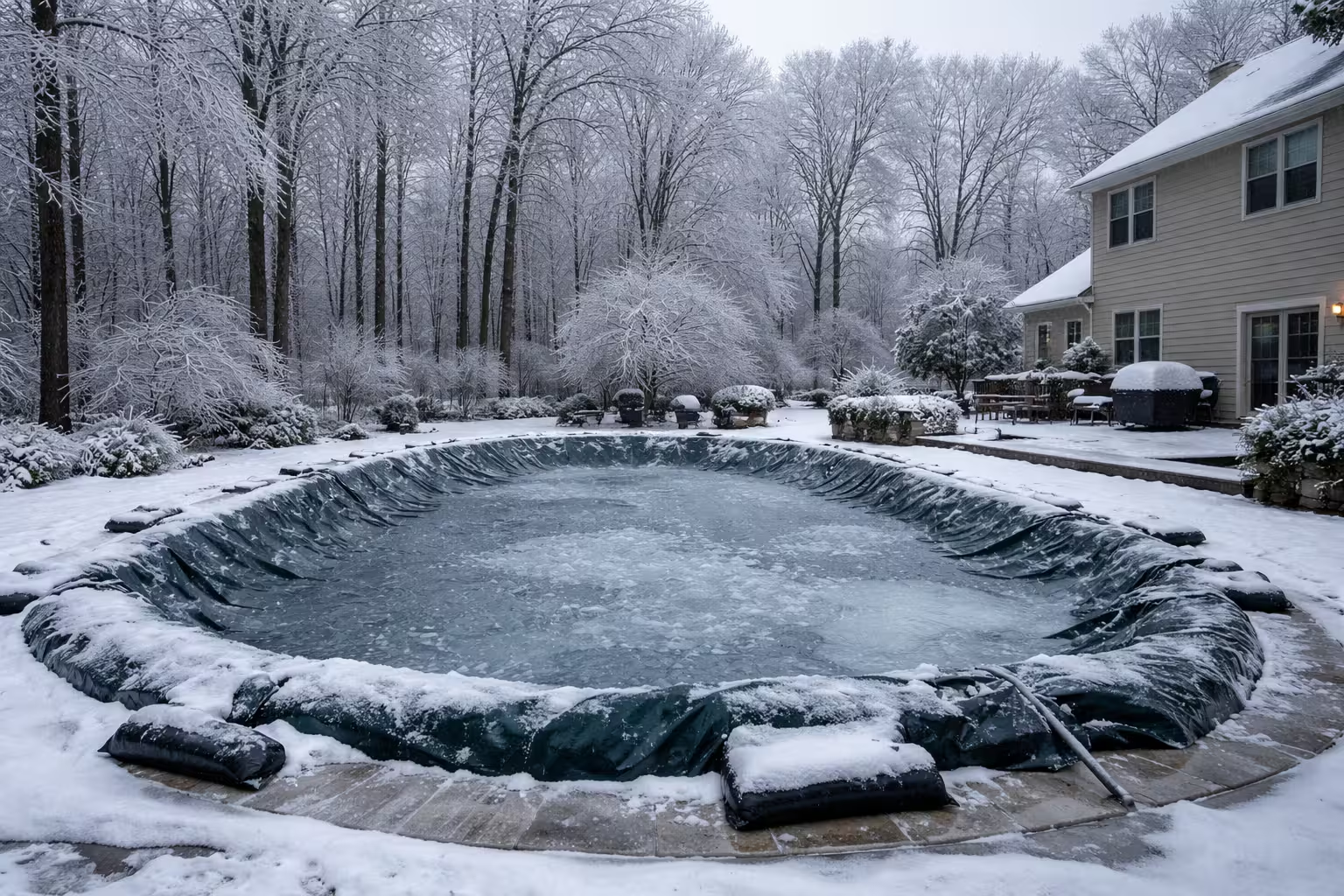
The DMV doesn’t get winters as brutal as the Midwest or New England, but what we do get — freeze-thaw cycles, occasional ice storms, and surprise overnight hard freezes — is exactly the type of weather that damages pools. The danger isn’t usually a sustained deep freeze. It’s the overnight drop to the mid-20s when you weren’t expecting it, or the ice storm that overloads a mesh cover, or the freeze that hits after you thought your pool was safely closed for the season.
If a significant winter storm has rolled through your part of Northern Virginia or Maryland and you’re not sure what shape your pool is in, this guide walks you through exactly what to check. Some things you can assess yourself. Others need a trained eye. Knowing the difference can save you from expensive surprises when opening season arrives.
Start With the Pool Cover
The cover is your first line of defense and the first thing to look at after any significant storm. Walk the perimeter and look for these warning signs:
- Ice or standing water on top: A solid layer of ice or heavy pooled water puts significant stress on the cover and the water bags or anchors holding it. Ice that forms directly on a mesh cover can freeze in place and tear the fabric when you try to remove it. If there’s standing water, pump it off carefully once temperatures rise above freezing.
- Sagging into the water: If the cover has sagged significantly and is now in contact with the pool water, debris will have accumulated and algae growth may have been encouraged by the light penetration. This doesn’t mean there’s structural damage, but it does mean a more involved opening process.
- Tears or separations: Check the entire cover surface and the perimeter for tears, holes, or areas where the cover has pulled away from its anchoring system. A compromised cover means whatever was in the storm — debris, dirt, ice melt runoff — has potentially entered the pool.
- Displaced or damaged anchors or water bags: Winter storms can shift anchor systems and freeze water bags solid, causing them to split when they thaw. Check that the perimeter anchoring system is intact.
A damaged cover can usually be replaced before opening season, but the key is identifying it now rather than discovering it the week you want to open the pool.
Inspect Pool Equipment for Freeze Damage
This is where winter storms do the most expensive damage. If water remained in pool equipment when temperatures dropped below 32°F and stayed there, you may be dealing with cracked or burst components. Freeze damage is one of the most common and most costly issues we address during spring openings across Fairfax County, Loudoun County, and Montgomery County.
Check each piece of equipment:
- Pump housing: Look for visible cracks in the pump body or housing, particularly around the drain plugs and the pump lid. A cracked pump housing is readily visible and means the pump will need repair or replacement before operating.
- Filter tank: Sand filters, cartridge filters, and DE filters can all crack from ice expansion. Spin the air bleeder valve and look for cracks along the top and around any sight glass. Check pressure gauge connections.
- Heater: The heat exchanger inside a pool heater is the most freeze-vulnerable component. Cracks in the exchanger can allow water and combustion gases to mix, which is both a safety and efficiency issue. Heaters with freeze damage typically need professional assessment rather than a visual DIY check.
- PVC plumbing unions and connections: Check all above-ground PVC fittings, especially unions (the threaded connections that allow equipment to be removed). Unions are common freeze-failure points because they trap water and the PVC can crack when expansion pressure is applied. A cracked union is usually an easy fix, but it needs to be caught before start-up.
- Valves: Check all multiport valves, backwash valves, and diverter valves for cracks or warping. Freeze damage here can cause valves to bypass water in unintended ways.
If you properly winterized with all equipment lines blown out and drain plugs removed, freeze damage risk is dramatically lower. If you’re not certain whether lines were properly blown out, have a professional assess before attempting to start equipment in the spring.
Check the Pool Water Level
When a pool is properly closed for winter in Virginia or Maryland, the water level is typically dropped below the skimmer openings to prevent water from freezing in the skimmer throat. After a major storm — especially one with significant snowmelt or rainfall — the water level may have risen considerably.
A pool with water that has re-entered the skimmer lines during a freeze, or one where the water level rose so high that it overlapped with improperly winterized equipment, may have suffered freeze damage in components that were supposed to be empty and protected.
If the water level looks significantly higher than where it was left at closing, and you’ve had a hard freeze since then, add this to your list of things to have assessed when the pool is opened professionally. Do not restart equipment without someone checking that all lines and components are structurally sound first.
Look for Structural Damage
Major ice events, heavy snow loads, and significant freeze-thaw cycling can affect pool structures themselves. This is more common in older pools and in pools in areas of Northern Virginia and Maryland with clay-heavy soil, where ground movement during freeze-thaw cycles can stress the shell. Here’s what to look for:
- New cracks in the pool deck: Settle cracks in concrete decking are common after a hard winter and often cosmetic. But a crack that runs from the deck into the pool coping, or that is accompanied by visible lifting or separation, could indicate ground movement worth monitoring.
- Pool coping displacement: If coping stones or concrete coping at the pool edge have shifted, cracked, or lifted, it can expose the bond beam below to water intrusion. This should be addressed before the swim season.
- The pool shell itself: You won’t be able to see the shell until the pool is opened and water is clear, but unusual changes to the pool cover shape (significant depressions or unevenness) can sometimes hint at changes below. A cracked or shifted shell is a major repair — if you have any indication of structural movement, schedule a professional inspection early.
Assess the Deck, Fencing, and Surrounding Area
Storms affect more than the pool itself. A full post-storm check should include:
- Deck surface condition: Ice and freeze-thaw cycles are particularly hard on concrete and paver decking. Look for new cracks, lifted or sunken sections, and damaged expansion joints. Addressing deck issues before summer prevents tripping hazards and water infiltration beneath the surface.
- Pool fence integrity: Check that fence panels, posts, and gate latches are undamaged and that the gate self-closes and latches properly. Virginia and Maryland pool fence requirements exist for safety — a damaged fence creates both compliance and liability issues. If your fence was damaged, prioritize repairs before swimmers are in the water.
- Surrounding landscape: Heavy ice or snow can bring down tree limbs. Walk the perimeter and look for any debris that may have landed on or near the pool cover, and for any landscaping that may now be directing runoff differently toward the pool area.
- Electrical equipment boxes and panels: Check that any outdoor electrical equipment (automation system panels, light transformers, remote control boxes) did not take on water damage during the storm. Ice infiltration into electrical enclosures can cause equipment failures and safety hazards.
When to Call a Pro vs. Handle It Yourself
Some post-storm assessments are straightforward homeowner tasks. Others require a professional. Here’s a practical breakdown:
You can handle yourself:
- Pumping standing water off the cover
- Checking the cover for visible tears and perimeter integrity
- Scanning above-ground plumbing and equipment for visible cracks
- Walking the deck for new cracks and the fence for damage
Call a pool professional:
- Any suspected equipment freeze damage before attempting to start the system
- Cracked or compromised heater assessment
- Any signs of structural pool damage or ground movement
- Situations where you’re not sure if lines were properly blown out before the freeze
- Electrical equipment that got wet or ice-impacted
Our service and repair team handles post-storm assessments throughout Northern Virginia and Maryland. If you’re not certain what you’re looking at, calling us before attempting to restart the system is almost always the cheaper path forward. Freeze damage that’s caught during inspection is repaired cleanly. Freeze damage discovered when a cracked pump is pressurized for the first time often means replacing the entire unit.
How to Prevent Winter Storm Damage Before It Happens
Post-storm inspection is important, but prevention is better. Here’s how well-maintained pools in the DMV survive hard winters without damage:
- Properly blow out all plumbing lines: Every line — skimmer returns, main drain, equipment plumbing — needs water completely removed and plugged. Water expands approximately 9% when it freezes. Any trapped water will find a weak point.
- Remove all drain plugs from equipment: Pump, filter, heater, and any other equipment with drain plugs should have them removed at closing and stored in the pump basket where they’re easy to find in spring.
- Use air pillows under the cover: For solid vinyl covers, an air pillow in the center of the pool creates a raised center surface that encourages ice and water to drain outward rather than pooling in the middle. It also absorbs some of the expansion pressure when the pool water freezes at the surface.
- Close at the right time: In Northern Virginia and Maryland, the target closing window is mid-October to early November. Closing late risks being caught by an early hard freeze. An early October closing doesn’t meaningfully harm the pool. A late November closing can.
Our pool closing service covers every step of a proper winterization, including line blow-out, equipment protection, chemical treatment, and cover installation. It’s the most cost-effective insurance against exactly the kind of storm damage described in this article.
Frequently Asked Questions
My pool wasn’t properly closed before a hard freeze. What should I do?
Don’t attempt to restart the equipment until a professional has assessed it. Cracked equipment running under pressure creates bigger and more expensive problems than catching the damage early. Contact a pool service company as soon as temperatures allow for a full assessment. Early spring is often when this work gets very busy, so call ahead.
How do I tell if my pool pump cracked from freezing?
With the power off, visually inspect the pump housing for cracks, especially around drain plug locations and the pump volute. Fill the pump with water and watch for leaks. If you see water seeping from the housing when it’s not running, the pump is cracked. Many pool service professionals can tell by visual inspection without filling the pump.
Can ice on top of my pool damage the pool itself?
Surface ice on the pool water is normal during a hard freeze and is not typically a problem for the pool shell. The concern is equipment and plumbing — water that freezes inside a pump, heater, or plumbing line causes damage through expansion pressure. A thick layer of ice on the surface is a sign the freeze was severe enough to potentially damage equipment if lines were not properly blown out.
How much does it cost to repair freeze damage to pool equipment in Northern Virginia or Maryland?
Repair costs vary widely depending on what failed. A cracked union may cost $100–$200 to repair. A cracked pump housing typically runs $300–$600 for repair or up to $1,200–$1,800 for a full pump replacement. A damaged heater heat exchanger is $500–$1,500 for repair or $2,000–$5,000 for replacement. Catching damage before the pool is pressurized often means the scope is limited to what actually cracked, rather than cascading damage from a blown fitting.
Should I get a professional opening after a hard winter?
Yes, especially if the pool went through a hard freeze or if you have any uncertainty about how well it was winterized. A professional opening includes a thorough equipment check and start-up, water chemistry assessment and initial balancing, and identification of any damage that occurred over winter — all performed before you commit to a swim season on a system that might need repair.
Not Sure What Your Pool Went Through This Winter?
If your pool in Virginia or Maryland faced a hard freeze and you’re not sure what you’re looking at, let our team take a look. Beltway Pools handles post-storm assessments, spring openings, and equipment repairs throughout Northern Virginia and Maryland. We’d rather catch a freeze problem before start-up than after. Explore our pool opening service, our repair and service options, or request a quote and we’ll get you on the schedule.
Ready to get started?
Beltway Pools serves Maryland, Virginia, and Washington DC.
Learn about our seasonal pool servicesKeep Reading
More Articles
- Seasonal Care
How to Get Your Pool Ready for Memorial Day Weekend
Memorial Day is the unofficial start of pool season in the DMV. Here's why you need to open at least 2 weeks early — and how to make sure your pool is ready.
Read article - Seasonal Care
How to Winterize Your Pool in Maryland and Virginia
How to properly winterize a pool in Maryland and Virginia — timing, chemical balancing, line blow-out, equipment draining, cover selection, and common mistakes to avoid.
Read article - Seasonal Care
How to Prepare Your Pool for Summer
A complete spring pool opening checklist for Virginia and Maryland homeowners — equipment inspection, startup chemistry sequence, timing, and how to handle common opening problems.
Read article