Pool Maintenance Mistakes That Are Costing DMV Homeowners Thousands

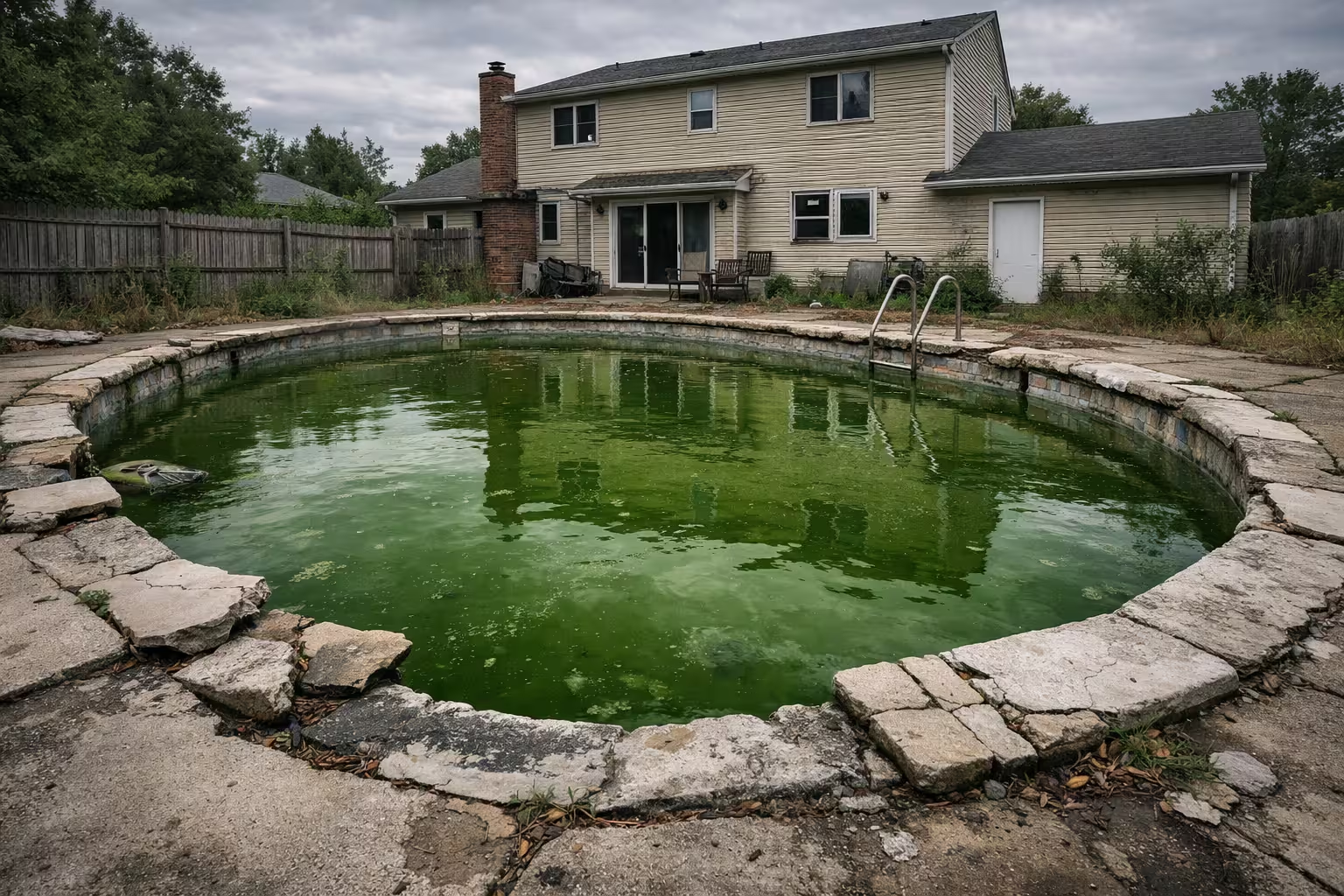
Pool maintenance is one of those things that feels optional — until it isn’t. We talk to homeowners in Northern Virginia and Maryland every week who ignored a minor issue for one season and are now facing a major repair bill. A failing pump that could have been caught with a $150 service call turns into a $1,200 motor replacement. Skipping the fall closing properly means a freeze-cracked pipe in January. Neglecting water chemistry for a summer means replastering a pool two years early.
These aren’t rare worst-case scenarios. They’re the normal consequences of the most common pool maintenance mistakes we see across Fairfax County, Prince William County, Montgomery County, and beyond. Here’s what to watch for — and what it costs when things go wrong.
Skipping Regular Water Testing
Water chemistry is the foundation of pool health, and testing is how you stay ahead of problems before they become expensive. Most pool professionals recommend testing your water at least twice a week during the DMV swim season, which runs from May through September. Many homeowners test once a week, or less — and some skip it for weeks at a time when the water “looks fine.”
Clear water does not mean balanced water. Chlorine can be dangerously low while the pool looks perfectly blue. pH can drift well below 7.2 — making the water corrosive to equipment seals, pump internals, and plaster — without any visible sign. Calcium hardness can climb or drop to damaging levels. You cannot see any of these problems without a test.
What happens when testing gets skipped:
- Low pH (below 7.2): Corrosive water attacks pump seal, plaster, and metal fittings. Plaster etching leads to premature resurfacing costs of $10,000–$20,000.
- High pH (above 7.8): Chlorine becomes largely ineffective. Algae and bacteria are no longer being controlled. Equipment efficiency drops.
- Low chlorine: Opens the door for algae blooms. Clearing a green pool can require $200–$400 in chemicals and multiple treatment rounds.
- High calcium hardness: Scale deposits build up in the heater, on tile, and on pool surfaces. Descaling and equipment cleaning is time-consuming and sometimes requires professional intervention.
Test your water consistently. It costs minutes and a few dollars in test strips or reagents. Skipping it can cost thousands.
Running the Pump for the Wrong Amount of Time
Your pool pump circulates and filters the water. Run it too little and you get stagnant water that breeds algae. Run it too much and you’re burning electricity needlessly, shortening the pump’s working life through unnecessary run hours, and potentially over-filtering in ways that stress your filter media.
In Northern Virginia and Maryland, during peak summer months, most residential pools need the pump running 8–12 hours per day to achieve full turnover of the water volume. Smaller pools may need less; larger pools may need more. In shoulder seasons (spring and fall), 6–8 hours is often sufficient.
The common mistake we see: homeowners set the pump schedule once when the pool opens and never adjust it. A schedule set for August is running the same hours in October when the bather load and temperature are completely different. If you have a variable-speed pump, use its programmable features — lower speeds during off-peak hours dramatically reduce energy costs while maintaining circulation.
Consistent under-running the pump is one of the fastest routes to recurring algae problems in the DMV’s hot, humid summers — which in turn means more chemical treatments, more vacuuming, and more service calls.
Ignoring Early Signs of a Leak
Pool leaks are expensive to repair when they’re caught — and more expensive when they aren’t. A small leak that’s ignored for one season can become a significant structural or plumbing issue by the next.
The challenge is that pool water loss isn’t always obvious. In a hot DMV summer, evaporation alone can cause a pool to lose up to a quarter inch of water per day. Add normal splash-out and backwash water loss and it can be hard to tell whether you have a leak or just expected water loss.
Here’s a simple way to check: the bucket test. Fill a bucket with pool water and set it on a step inside the pool. Mark both the bucket water level and the pool water level. After 24 hours, compare the two. If the pool has lost significantly more water than the bucket (accounting for evaporation), you likely have a leak.
If you suspect a leak, don’t ignore it. Our service and repair team can identify the source and address it before it causes secondary damage to surrounding structures or saturates the ground beneath the pool shell. A small plumbing leak caught early might cost a few hundred dollars to fix. An underground plumbing leak that has been running for two seasons can require excavation and pipe replacement costing $5,000 to $15,000 or more.
Neglecting the Filter System
Your filter — whether it’s sand, cartridge, or DE (diatomaceous earth) — is responsible for physically removing debris and contaminants from the water. When a filter is overdue for cleaning or maintenance, it can’t do its job. Pressure builds, flow through the system slows, the pump works harder, and water quality drops.
Filter maintenance requirements by type:
- Sand filters: Need backwashing approximately every 1–2 weeks during swimming season, or when pressure rises 8–10 PSI above clean baseline. Sand media should be replaced every 3–5 years.
- Cartridge filters: Cartridges should be rinsed every 2–4 weeks and deep-cleaned with filter cleaner 1–2 times per season. Cartridges typically need replacement every 1–3 seasons depending on bather load and water quality.
- DE filters: Need backwashing when pressure rises, followed by adding fresh DE through the skimmer. The full grid assembly should be cleaned and inspected at least once a season.
The most common mistake is running the filter system until something fails rather than following a maintenance schedule. A clogged or failed cartridge can cause a pressure spike that damages the filter housing or the pump. Ignoring a sand filter for multiple years can result in “channeling” where water bypasses the sand altogether and flows unfiltered back into the pool. Replacing a filter that was never properly maintained costs $400–$1,500 depending on type and size.
Shocking the Pool Incorrectly — or Not at All
Shocking — adding a concentrated dose of oxidizer to the pool — is a necessary part of pool maintenance, not an optional extra. Shock breaks down chloramines (the combined chlorine compounds that form when chlorine reacts with body oils, sunscreen, urine, and other organic matter), kills algae in early growth stages, and restores free chlorine levels to an effective range.
The mistakes we see most often:
- Not shocking frequently enough: Pools should be shocked at minimum every 1–2 weeks during active swimming season. After a heavy rain, a large pool party, or a period of high bather load, shock immediately.
- Shocking during the day: Calcium hypochlorite and many other shock formulas are degraded rapidly by UV sunlight. Shocking during peak sun hours means the product burns off before it can work. Always shock at dusk or after sunset.
- Adding shock directly to the pool without pre-dissolving: Granulated shock dropped directly into the pool can bleach and damage plaster or vinyl liners. Pre-dissolve shock in a bucket of water first and pour the solution around the perimeter.
- Not testing before shocking: If your pH is above 7.8, shock is largely ineffective. Always balance pH first, then shock.
Persistent chloramine buildup from improper or infrequent shocking leads to that distinctive “pool chemical smell,” eye and skin irritation for swimmers, and water that feels harsh. It also masks true sanitizer levels and leads homeowners to add more chlorine than they need, which increases costs and potentially damages equipment over time.
Letting pH Levels Drift Below 7.2
This is one of the most underappreciated maintenance mistakes — and one of the most damaging. Pool water with a pH below 7.2 is chemically acidic. It does not feel dramatically different to swimmers, but it is actively corroding the equipment and surfaces it contacts.
Acidic pool water attacks:
- Pump seals and O-rings, causing premature failure and leaks
- Plaster, etching the surface and shortening the resurfacing interval by years
- Metal fittings and heat exchanger components inside the heater
- Vinyl liners, weakening and ultimately causing cracking
- Colored plaster or aggregate finishes, causing visible bleaching and discoloration
In the DMV, heavy summer rains can drop pool pH quickly by diluting the water. Heavy bather loads produce carbon dioxide that also drives pH down. Without regular testing and adjustment, pH can drift below 7.2 easily in an active pool during a wet Virginia or Maryland summer. Check pH at every water test and add sodium carbonate (soda ash) as needed to keep it in the 7.4–7.6 range.
Skipping the Fall Closing — or Doing It Too Late
Winterizing a pool properly is one of the most important maintenance tasks of the year in Northern Virginia and Maryland. The DMV gets cold enough to freeze pool plumbing, and a pipe that freezes and expands even once can crack. If water remains in the equipment when temperatures drop below 32°F, the pump housing, filter, and heater heat exchanger are all at risk.
Common closing mistakes we see every spring when we open pools across Fairfax County, Loudoun County, and Montgomery County:
- Closing too late: Aim to close your pool by mid-October to early November in most DMV locations. Waiting for the water to “get cold enough” risks getting caught off-guard by an early freeze.
- Not fully draining equipment lines: Water left in the pump, heater, or filter will freeze. Proper closing requires blowing out or draining all equipment and plumbing lines.
- Under-dosing closing chemicals: Algaecide, sequestering agent, and a closing shock all play a role in keeping water quality manageable over winter. Skimping here means a green pool in April.
- Not securing the cover properly: A cover that blows off or sags into the water during winter creates debris problems, can damage the cover, and introduces light that encourages algae growth.
A properly closed pool opens faster, cleaner, and cheaper in the spring. Our pool closing service handles every step of the process, including blow-out of lines, proper chemical treatment, and cover installation. It’s one of the most cost-effective services we offer when you consider what a poorly closed pool costs to open.
Frequently Asked Questions
How often should I test my pool water?
During the swimming season in Virginia and Maryland, test at least twice a week. Weekly testing is a minimum. After heavy rain, large pool parties, or any unusual event (like algae appearing), test immediately and adjust. Consistent testing is the single most effective thing a pool owner can do to avoid expensive problems.
What is the most expensive pool maintenance mistake?
Ignoring leaks is consistently the most expensive oversight we see. A small, slow leak can go unnoticed for an entire season, slowly saturating the ground around the pool, undermining decking, and potentially causing structural problems. Caught early, a leak might cost a few hundred dollars to fix. Ignored for a year or two, it can run $10,000 or more.
Can I do pool maintenance myself, or do I need a professional?
Many routine tasks — testing water, adding chemicals, cleaning the skimmer basket, vacuuming — are manageable for most pool owners. Equipment repairs, leak detection, opening and closing, and anything involving electrical components should be handled by a professional. For homeowners who want consistent water quality without the time commitment, a regular maintenance plan is often the most cost-effective option overall.
How do I know if my pool pump is failing?
Signs include unusual noise (grinding, humming, or squealing), reduced water flow to jets, the pump losing prime repeatedly, and visible leaks from the pump housing or valve fittings. If you notice any of these, have it assessed quickly — a minor seal failure can become a full motor failure if the pump runs while leaking or losing prime.
What is the ideal pool chemical balance for a DMV pool?
Target ranges: free chlorine 1–3 ppm, pH 7.4–7.6, total alkalinity 80–120 ppm, calcium hardness 200–400 ppm, cyanuric acid (stabilizer) 30–50 ppm. In hot DMV summers, you may need to test and adjust more frequently to keep these in range.
Don’t Let Small Mistakes Become Big Bills
Regular pool maintenance isn’t just about keeping your water clear — it’s how you protect the tens of thousands of dollars you have invested in your pool and equipment. The mistakes above are correctable, and catching them early is almost always cheaper than dealing with the consequences. If you want to take the guesswork out of pool care in Northern Virginia or Maryland, explore our pool maintenance plans or get a free quote from the Beltway Pools team today.
Ready to get started?
Beltway Pools serves Maryland, Virginia, and Washington DC.
Explore our maintenance servicesKeep Reading
More Articles
- Pool Maintenance
Year-Round Pool Maintenance Beats the Summer Rush
Why consistent year-round pool maintenance prevents costly repairs, extends equipment life, and lets you skip the summer service backlog.
Read article - Pool Maintenance
Chlorine Mistakes Most Pool Owners Make (And What to Do Instead)
Chlorine is the backbone of pool sanitation — but most people use it wrong. Here are the common chlorine mistakes damaging pools across Virginia and Maryland.
Read article - Pool Maintenance
How to Balance Pool Chemicals: A Homeowner's Guide
A practical guide to testing and balancing pool chemicals in Virginia and Maryland — pH, alkalinity, chlorine, CYA, and a seasonal chemistry calendar.
Read article