Year-Round Pool Maintenance Beats the Summer Rush

Most homeowners think of pool service as a seasonal affair — book an opening in May, schedule a closing in October, and forget about the pool the rest of the year. It’s an understandable mindset, but it’s one that consistently leads to bigger problems and bigger bills. The reality is that a pool requires ongoing attention even when it’s not in use — and the homeowners who invest in year-round care almost always spend less money over time than those who don’t.
At Beltway Pools, we work with homeowners throughout Virginia, Maryland, and Washington, DC, and the difference in long-term pool condition between proactively maintained pools and seasonally-only maintained pools is significant. This article explains why that gap exists, what a proper year-round maintenance schedule looks like, and what you can realistically expect to spend — and save.
Summer Is the Busiest Season — And That Creates Delays
Every pool service company in the DMV area faces the same crunch: everyone wants their pool open and ready before Memorial Day weekend. Scheduling gets compressed, technicians are stretched across more properties, and parts that need to be ordered take longer to arrive because demand is high regionally.
When you only schedule service at the beginning and end of the season, you’re joining the queue at exactly the most congested moments. If an issue surfaces — a pump that struggled all winter, a heater that didn’t ignite cleanly at closing — you’re looking at a potential 2–4 week wait for a repair appointment while your pool sits unusable at the start of summer.
Year-round customers don’t have this problem. They’re known to their service team, their pool’s history is documented, and their equipment gets attention during the slower months when technicians are available and less rushed.
What Happens to Your Pool Over Winter
Closing your pool properly is necessary — but it doesn’t mean your pool is completely inert until spring. Several things can and do happen in the off-season:
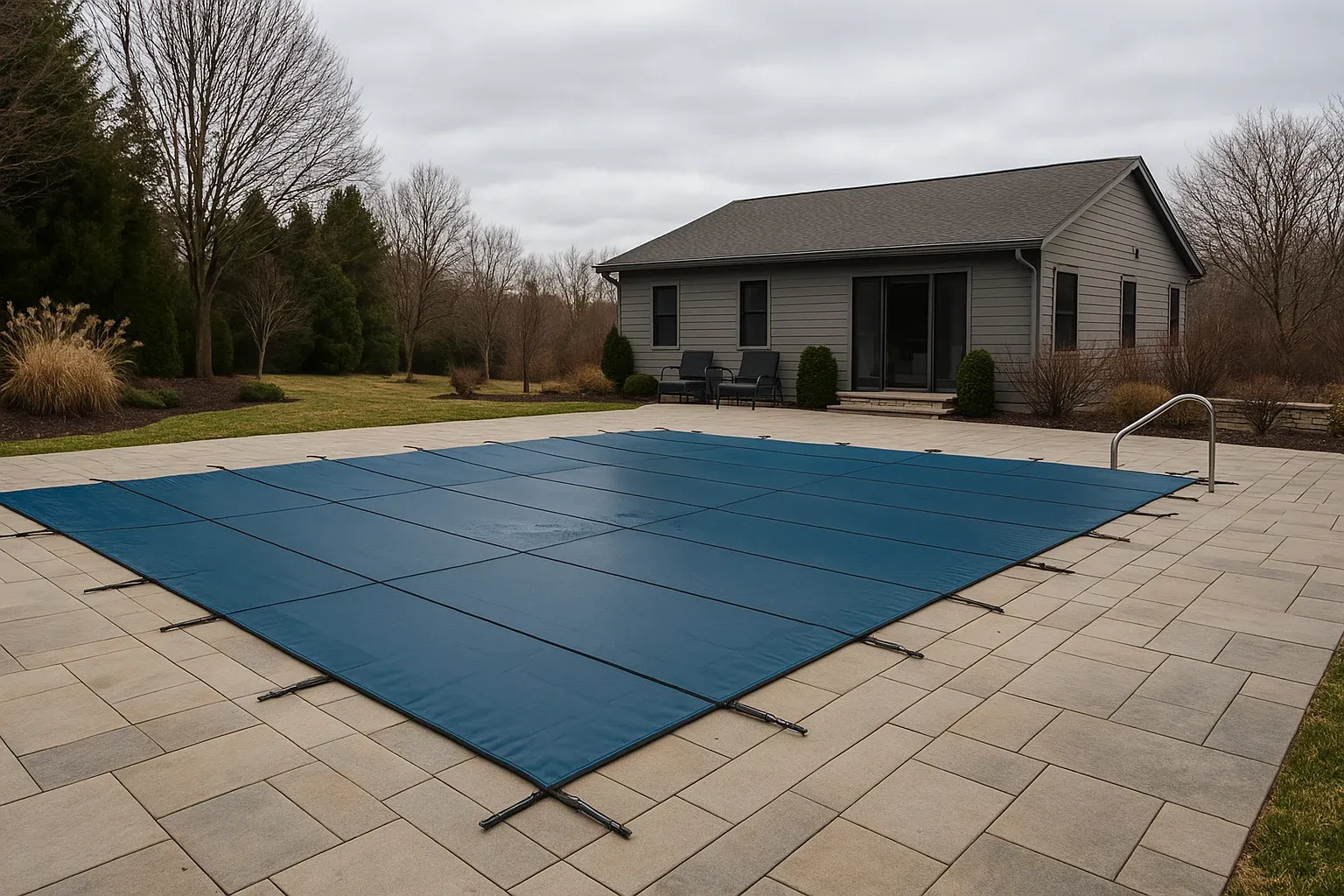
- Cover failure: Mesh safety covers and solid winter covers can shift, develop holes, or accumulate standing water that strains the anchor system. A cover that lets debris in over winter means a far more involved opening in spring.
- Water chemistry drift: Even with a properly closed pool, water chemistry shifts over months. Algae spores can establish a foothold under the cover, particularly in wet winters with fluctuating temperatures. Starting spring with a green pool is expensive to correct — correction chemical costs alone can run $200–$600, on top of the service time.
- Freeze damage: In Virginia and Maryland, temperatures regularly dip below freezing from December through February. If a pool was closed with residual water in above-ground plumbing, returns, or equipment, freeze-thaw cycles can crack pipes and fittings. This is especially common if the closing was rushed or incomplete.
- Equipment corrosion: Unused equipment degrades faster than operating equipment in some respects — O-rings dry out, pump seals can set in suboptimal positions, and heater bypass valves can seize over a long winter idle.
A single mid-winter inspection visit — typically 60–90 minutes — can catch most of these issues early, at a fraction of what correction costs in spring.
The Four-Season Maintenance Framework
A complete year-round pool care schedule breaks down into four distinct phases, each with its own priorities:
Spring (March – May): Opening and Startup
This is the most critical service window of the year. A proper opening includes: removing and inspecting the cover, reconnecting and testing all plumbing and equipment, initial chemical balance adjustment, and a full equipment inspection. If your pool went into winter in good shape and received a mid-winter check, spring opening is typically a 2–3 hour process. If it didn’t, it can take 2–3 visits and several weeks to get the water ready to swim.
Summer (June – August): Active Season Care
During active use, pools need the most frequent attention — typically weekly or bi-weekly service depending on bather load, surrounding vegetation, and weather. Core summer tasks: water chemistry testing and adjustment, skimming and brushing, filter backwash or cleaning, and visual equipment inspection. This isn’t the time to let chemistry drift; algae blooms can establish in 24–48 hours of warm, unbalanced water.
Fall (September – November): Pre-Closing Preparation
Pool use tapers off in September and October in the DMV area, but this is actually an important service window. Equipment should be assessed before closing — if there are components that need replacement over winter, fall is the time to identify and order them. Pool chemistry should be balanced before closing (not just at closing), and leaves should be managed aggressively to prevent staining.
Winter (December – February): Monitoring and Protection
Even a properly closed pool benefits from one or two visits during winter. Cover integrity checks, a quick look at water level, and a visual equipment scan take less than an hour but give you confidence that nothing is developing quietly under the cover.
What Year-Round Maintenance Actually Costs
Many homeowners avoid year-round service plans because they don’t want to pay for “off-season” service when they’re not swimming. This calculation often backfires.
Compare two scenarios for a Virginia homeowner with a standard 15,000-gallon inground pool:
- Seasonal-only approach: Opening service + closing service + reactive repair calls when something breaks = $600–$1,200 per year baseline, plus whatever unexpected repairs surface. In a typical year with one or two reactive calls, total annual spend commonly runs $1,500–$3,000.
- Year-round maintenance plan: Monthly or bi-monthly service visits throughout the year, including opening and closing, plus chemistry monitoring = typically $1,800–$3,600 per year depending on visit frequency and pool size.
The actual cost difference is smaller than most homeowners expect — and the year-round approach typically results in lower reactive repair costs and longer equipment life. Variable-speed pumps and heaters that are properly maintained and monitored routinely last 12–15 years; the same equipment maintained reactively often fails at 7–9 years.
Signs Your Pool Needs More Frequent Attention
Some pools require more maintenance than others. If any of these apply to your pool, year-round service is especially important:
- Heavy tree coverage: Leaves, pollen, and organic debris accelerate both biological and chemical imbalance. Pools surrounded by oak or maple trees often need weekly skimming and more frequent filter cleaning.
- High bather load: Pools used daily by children and adults consume sanitizer faster and accumulate contaminants (sunscreen, sweat, body oils) that can stress filter media.
- Older equipment: Pools with heaters, pumps, or filters over 10 years old have higher failure risk and benefit from more frequent inspection to catch degradation early.
- History of algae problems: If your pool has had algae blooms in past seasons, it’s more susceptible. Quarterly water chemistry analysis helps identify the conditions that led to past outbreaks and prevent recurrence.
- Recent renovation: The 12–18 months following a resurfacing project require more careful chemistry management to protect the new finish from staining and etching.
Customized Service That Works Around Your Schedule
Beltway Pools designs maintenance plans around each customer’s specific pool, usage patterns, and preferences. Some homeowners want full-service monthly visits where we handle everything; others prefer bi-weekly chemistry checks during summer and a quarterly inspection during the off-season. We tailor the approach to match your pool’s actual needs — not a standardized package that may include services your pool doesn’t require.
Working with a consistent service team also means we accumulate knowledge about your specific pool over time. We know your equipment’s service history, which chemical parameters tend to drift in your pool, and how your cover performs. That contextual knowledge makes every service visit more efficient and more effective.
Frequently Asked Questions
Do I really need pool service in winter if my pool is closed?
Not every week — but one or two mid-winter inspection visits are strongly recommended for pools in Virginia and Maryland. Freeze damage, cover failures, and chemistry drift can all develop over winter and are far cheaper to address early than to correct at spring opening.
How often should a pool be serviced during swim season?
Weekly service is ideal for pools with average-to-heavy use. Bi-weekly is workable for lightly used pools with good automation. The right frequency depends on your bather load, amount of surrounding vegetation, and whether you have an automatic sanitizer (SWG or feeder).
What’s included in a typical year-round pool maintenance plan?
A complete plan covers spring opening, regular in-season chemical testing and balancing, filter cleaning, equipment inspection and lubrication, fall closing, and at least one winter monitoring visit. Chemical costs are sometimes included, sometimes billed separately depending on the service provider.
Can I handle pool maintenance myself and just call pros when needed?
Many homeowners do successfully self-maintain their pools. The risk is that equipment issues and early-stage chemistry problems are often subtle and easy to miss without experience. A hybrid approach — DIY weekly chemistry testing, with quarterly professional inspections — can work well for hands-on homeowners.
Make the Smart Move Before Summer Hits
If you want to avoid the seasonal rush, protect your pool investment from off-season damage, and spend less on reactive repairs over time, a year-round maintenance plan is the most logical choice. The cost difference versus seasonal-only service is smaller than most people expect — and the peace of mind is significantly greater.
Contact Beltway Pools to discuss a maintenance plan tailored to your pool and schedule, or visit our pool maintenance page to explore what’s included in our service offerings throughout Virginia, Maryland, and DC.
Ready to get started?
Beltway Pools serves Maryland, Virginia, and Washington DC.
Explore our maintenance servicesKeep Reading
More Articles
- Pool Maintenance
Pool Maintenance Mistakes That Are Costing DMV Homeowners Thousands
Small pool care oversights add up to major repair bills. Here are the most common maintenance mistakes we see in Northern Virginia and Maryland — and how to avoid them.
Read article - Pool Maintenance
Chlorine Mistakes Most Pool Owners Make (And What to Do Instead)
Chlorine is the backbone of pool sanitation — but most people use it wrong. Here are the common chlorine mistakes damaging pools across Virginia and Maryland.
Read article - Pool Maintenance
How to Balance Pool Chemicals: A Homeowner's Guide
A practical guide to testing and balancing pool chemicals in Virginia and Maryland — pH, alkalinity, chlorine, CYA, and a seasonal chemistry calendar.
Read article