How Pool Condition Affects Your Home's Value in the DMV

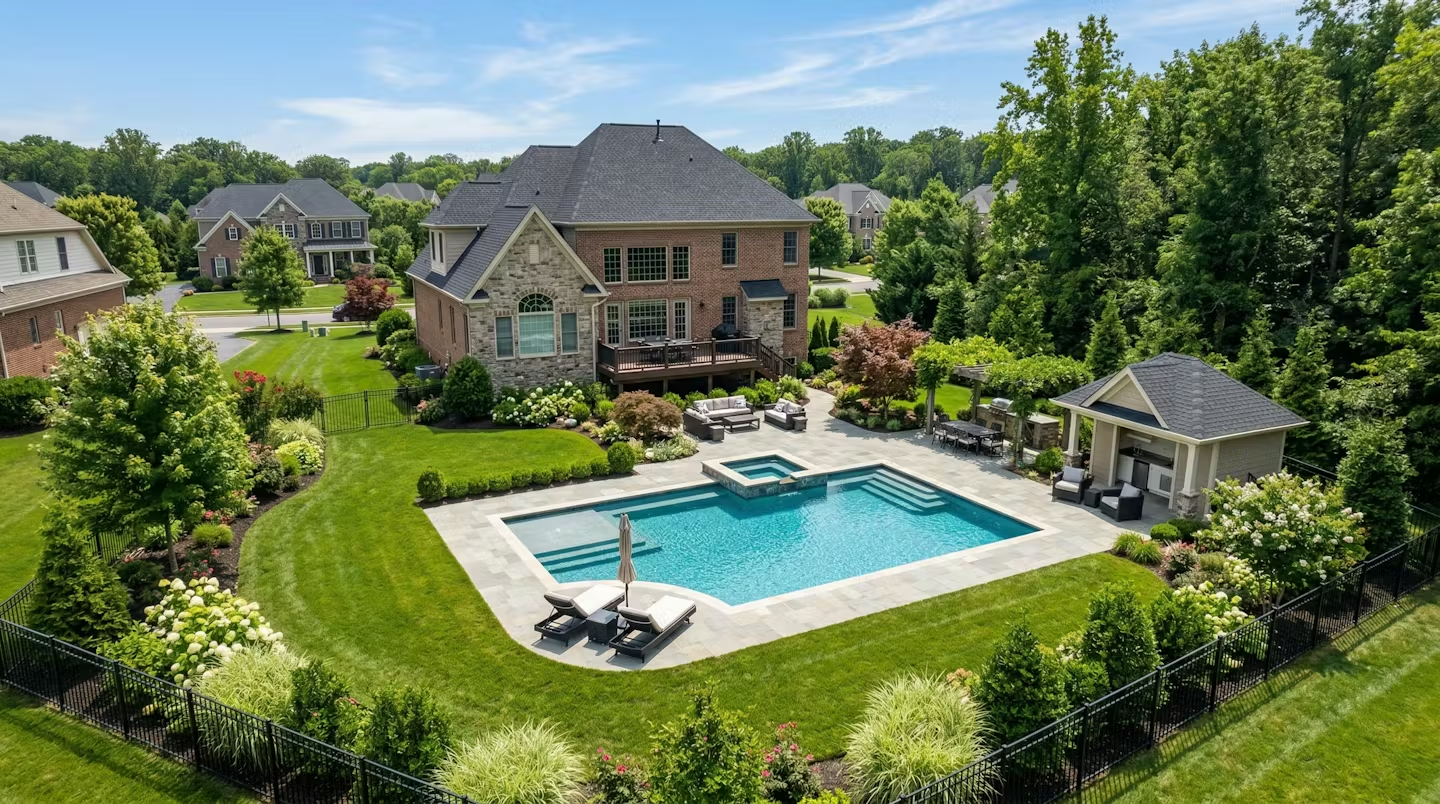
A backyard pool is one of the most prized features a home can offer in Northern Virginia and Maryland. In the summer heat of Fairfax County or the affluent suburbs of Montgomery County, a clean, working pool can push a buyer to write an offer on the spot. But here’s the part most sellers don’t think about until it’s too late: a pool in poor condition doesn’t just fail to add value — it can actively hurt your sale.
At Beltway Pools, we work alongside Realtors across the DMV region on pre-listing pool inspections, repairs, and openings. We’ve seen transactions slow down over pool equipment that should have been serviced a year ago, and we’ve seen sellers get top dollar because they took care of their pool before listing. The difference comes down to condition — and what buyers and their inspectors find when they look closely.
Why a Pool Can Make or Break a Home Sale in Virginia and Maryland
In competitive DMV markets like McLean, Bethesda, Great Falls, and Reston, buyers already expect quality. A pool adds appeal, but the moment it raises concerns, it shifts from an asset to a liability. Buyers start asking: if the pool wasn’t maintained, what else wasn’t?
According to real estate professionals across Northern Virginia and Maryland, a well-maintained inground pool can add $10,000 to $30,000 or more to a home’s perceived value. That premium is supported by the market — buyers pay more for homes where they don’t have to immediately invest in repairs. A pool with visible cracks, green water, outdated equipment, or unknown service history draws price reductions and concession requests, not competing offers.
The reality we see on the ground: sellers who prepare their pool before listing consistently get better outcomes than those who leave it as-is and hope a buyer won’t notice. In a region where pool homes are expected to be premium properties, neglect is obvious.
What Buyers in the DMV Look For (and Worry About)
Most buyers stepping into a backyard aren’t pool experts. What they notice first is the visual: Is the water clear? Is the equipment running? Does the pool deck look maintained? But the buyers who have done their research — or who have a sharp Realtor — go further. They ask questions and they hire pool inspectors.
The questions we hear most often from buyers considering a pool property in Northern Virginia and Maryland:
- How old is the equipment? Pumps typically last 8–12 years, heaters 10–15 years, filters 15–20 years. Equipment near or past end of life is a negotiating point.
- Is there a service history? A pool that has been on a regular maintenance program signals responsible ownership. No records signals the opposite.
- Has the pool ever been resurfaced? Plaster and aggregate surfaces need resurfacing every 10–20 years. If it hasn’t been done and it’s overdue, the buyer factors in that cost.
- Are there known leaks? Underground leaks are the most expensive pool problem and the one buyers fear most.
- Is the pool up to current safety codes? Virginia and Maryland have specific requirements around drains, fencing, and bonding/grounding. Non-compliance creates liability for the new owner.
If a seller can’t answer these questions clearly, buyers fill in the blanks with worst-case assumptions.
Common Pool Problems That Surface During Inspections
Home inspections in Virginia and Maryland rarely include a detailed pool assessment. Buyers who are serious about a pool property hire a dedicated pool inspector — and what they find affects the transaction. Here are the most common issues we see flagged in the DMV:
- Pump and motor wear: An aging pump that still runs may be flagged as near end of life. Replacement costs $500–$1,500 depending on the system.
- Heater problems: Cracked heat exchangers, corroded burners, or aged ignition systems are frequently found on pools that haven’t had regular annual service. Heater replacement ranges from $1,500 to $5,000.
- Structural cracks: Hairline stress cracks can be cosmetic, but any visible crack in the shell gets noted. If it’s a structural crack, remediation can cost $3,000 to $15,000 or more depending on extent.
- Plumbing leaks: Underground plumbing leaks are serious. Finding and repairing them typically costs $2,000 to $15,000 depending on how accessible the lines are and how long the leak has been active.
- Electrical safety violations: GFCI protection, bonding, and grounding requirements exist for safety reasons. Code violations often require remediation before closing as a lender or insurance condition.
- Outdated drain covers: Virginia and Maryland both enforce the Virginia Graeme Baker Pool and Spa Safety Act standards. Non-compliant suction drain covers must be replaced. It’s a relatively inexpensive fix but a required one.
- Water chemistry damage: Severely imbalanced water over time etches plaster, stains surfaces, and damages equipment internals. It signals years of neglect that may have shortened equipment life.
How Much Does Pool Condition Actually Affect Your Sale Price?
Let’s be direct. We work with Realtors across Fairfax County, Prince William County, Loudoun County, Montgomery County, and Prince George’s County. The pattern is consistent: pool condition shapes the negotiation, one way or another.
Here is what we typically see in the Northern Virginia and Maryland market at various price tiers:
- Well-maintained pool with service records: Supports asking price. Often used as a differentiator in listings. Low risk of inspection-related concessions.
- Functional pool with minor deferred maintenance: May trigger a modest credit request of $1,000–$5,000 during negotiations depending on what the inspector flags.
- Pool with significant deferred maintenance or aging equipment: Buyers typically request $5,000–$15,000 in credits or price reductions, sometimes more. In some cases, buyers walk if they feel the unknown risk is too high.
- Pool with major structural or plumbing issues: These are deal disruptors. Either the seller makes the repairs pre-closing, or the price comes down enough that the buyer is compensated. Deals fall through not because of the repair cost, but because of the uncertainty around scope.
A pool inspection that comes back clean gives sellers confidence in their position. One that flags problems turns the closing table into a negotiation. The $300–$400 a seller spends on a pre-listing inspection often saves thousands by allowing them to control the repair narrative instead of reacting to it.
What Smart Sellers Do Before Listing a Home with a Pool
If you’re preparing to sell a home with a pool in Virginia or Maryland, these steps put you in the strongest possible position:
- Get a pre-listing pool inspection. Have a professional inspect the pool before buyers see it. This gives you time to address issues on your schedule, not under closing pressure.
- Open and service the pool. A closed or winterized pool tells buyers nothing. Open it, balance the water, and make sure equipment is running. Visual confirmation of a working pool is worth more than any seller’s disclosure form.
- Document your maintenance history. Pull service invoices, maintenance records, and any equipment warranties. Buyers and their Realtors respond very positively to a folder of organized paperwork — it signals a responsible owner.
- Replace equipment that’s clearly aging. A pump that’s 12 years old will be flagged. Consider replacing it before listing. The cost you spend often comes back in reduced concession requests.
- Address visible cosmetic issues. Cracked tile, deteriorating coping, stained plaster, and a faded deck are noticed during showings before the inspector ever arrives. Budget cosmetic improvements where they have visual impact.
- Disclose accurately. Virginia and Maryland both require sellers to disclose known material defects. Transparency protects you legally and builds buyer confidence.
What Buyers Should Know Before Closing on a Pool Property
If you’re buying a home with a pool in the DMV, the single most important thing you can do is hire a dedicated pool inspector — separate from the general home inspector. Standard home inspections do not assess pool equipment thoroughly. A pool inspector runs the equipment, checks the plumbing, examines the shell, and evaluates electrical safety.
Pool inspections in Northern Virginia and Maryland typically cost $200 to $400. That’s a small number compared to any one of the items they might find. An $8,000 heat pump replacement, a $12,000 plumbing repair, or a $20,000 resurfacing job are all things a good pool inspection can surface before you’re locked in.
Beyond the inspection, ask the seller for:
- Make, model, and age of the pump, filter, heater, and automation system
- Service records or maintenance logs from the current owner
- Any history of leaks or structural repairs
- Whether the pool is currently on a regular maintenance program
If the seller has no maintenance records, price that uncertainty into your offer. A pool with no documented service history is a pool with unknown risk — and unknown risk should reduce what you pay.
How Beltway Pools Supports DMV Real Estate Transactions
We have built close partnerships with Realtors across Northern Virginia, Maryland, and Washington DC. Whether a listing agent needs a pool opened and serviced before photos, a buyer’s agent needs an inspection completed during escrow, or a seller needs repairs done on a fast closing timeline — we understand how pool condition fits into the real estate process.
Our team has worked on pool properties in Lorton, Springfield, Centreville, Woodbridge, Ashburn, Leesburg, Bethesda, Rockville, Potomac, Silver Spring, and throughout the broader DMV. If you’re a Realtor navigating a transaction where pool condition is a factor, call us. We can usually get out quickly and give you a clear, honest assessment.
Pool condition isn’t an afterthought in DMV real estate — it’s a negotiating variable. Make it work for you instead of against you.
Frequently Asked Questions
Does a pool always add value to a home in Virginia or Maryland?
Not automatically. A well-maintained pool in a market where outdoor living is valued can add $10,000 to $30,000 or more. A pool in poor condition can erode that value and create inspection-related obstacles during the sale. Condition is what determines whether a pool is an asset or a liability.
Is a dedicated pool inspection required when buying a home?
It’s not legally required, but it is strongly recommended. Standard home inspections do not provide a thorough evaluation of pool equipment, structural integrity, or plumbing. A dedicated pool inspector is the only way to fully understand what you’re purchasing.
How long does pool equipment typically last?
Pumps generally last 8–12 years, heaters 10–15 years, filters 15–20 years, and automation systems vary. With regular maintenance and service, equipment can reach the higher end of those ranges. Without it, failures come sooner.
What is the most expensive pool problem buyers find during inspections?
Underground plumbing leaks and structural shell damage requiring significant repair tend to be the most costly discoveries, often running $10,000 to $30,000 or more. Equipment replacement is more common but more manageable. The real risk is problems that weren’t disclosed and weren’t found until after closing.
Can a seller be held responsible for pool problems found after closing?
In Virginia and Maryland, sellers are required to disclose known material defects. If a pool problem was known and not disclosed, the seller may face legal exposure post-closing. Honest disclosure at listing — and addressing issues beforehand when possible — protects everyone involved.
Let Beltway Pools Help You Put Your Best Pool Forward
Whether you’re preparing to list a home in Northern Virginia, buying a property with a pool in Maryland, or a Realtor whose transaction involves a pool, Beltway Pools is here to help. We provide pre-listing pool inspections, repairs, openings, and service that turn pool condition from a question mark into a selling point. Explore our pool inspection services, review our service and repair options, or get a free quote from our team today.
Ready to get started?
Beltway Pools serves Maryland, Virginia, and Washington DC.
Explore our service & repair optionsKeep Reading
More Articles
- Service & Repairs
Variable-Speed Pool Pumps: Federal Law & Energy Savings
Federal law now requires variable-speed pool pumps on most replacements. Learn what the DOE rule means for your pool and how to save up to 80% on energy costs.
Read article - Service & Repairs
Why You Need a Pool Inspection When Buying or Selling a Home
Clear water doesn't mean a healthy pool. Learn what a professional pool inspection covers and why it matters for buyers and sellers in Virginia and Maryland.
Read article - Service & Repairs
Pool Pump Failure: Warning Signs, Causes & Repair Costs
Pool pump failure warning signs, common causes, repair vs. replacement decisions, and realistic repair costs in Virginia and Maryland — a practical guide.
Read article