Why You Need a Pool Inspection When Buying or Selling a Home

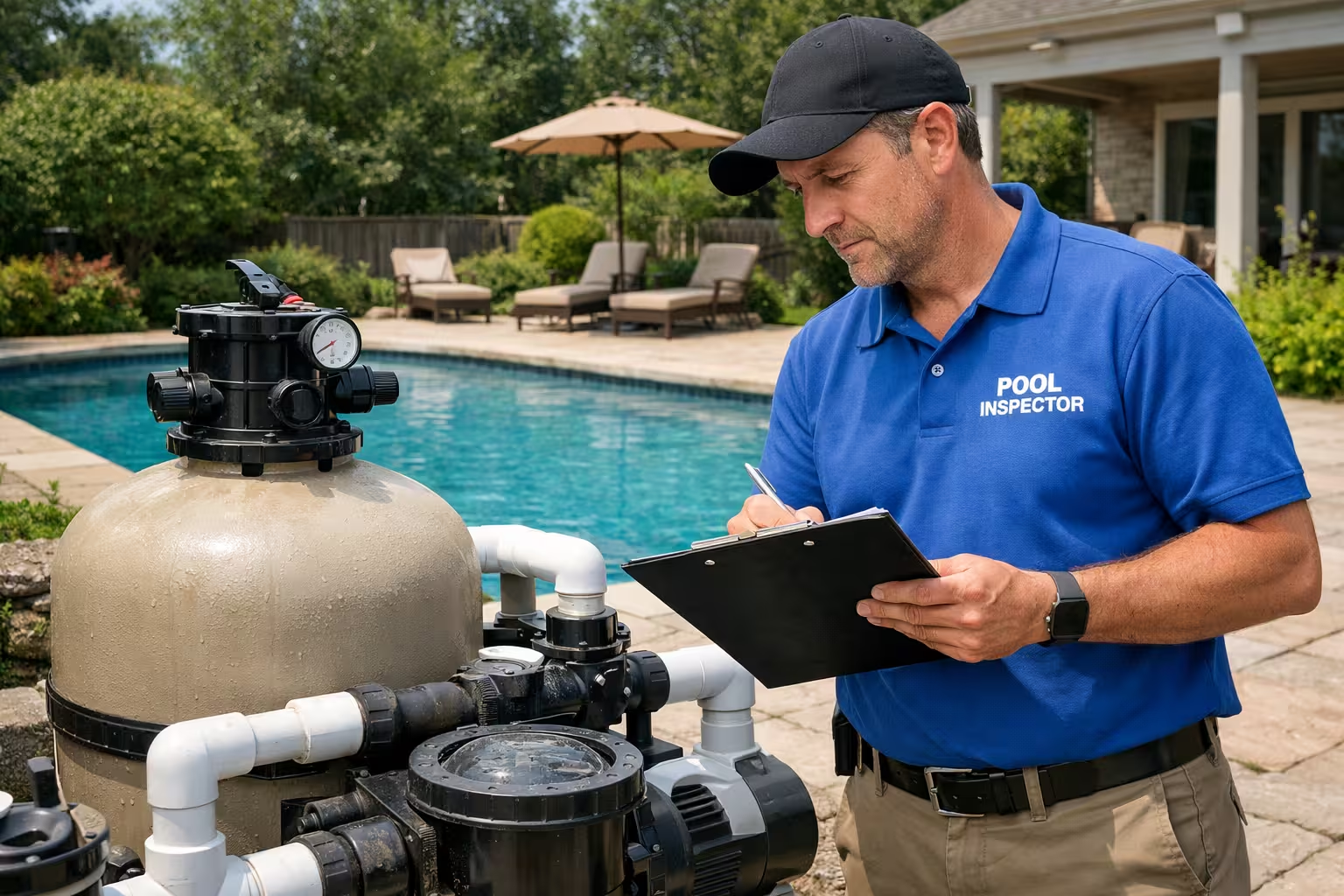
Clear, blue water is one of the most reassuring things a buyer can see when touring a home with a pool. And it’s also almost completely misleading as a measure of pool condition. The water can look inviting and clean while the pump is on its last season, the plumbing has a slow leak, the heater heat exchanger is cracked, or the electrical bonding system has a safety deficiency.
Pools are complex mechanical systems with underground plumbing, high-voltage electrical components, and structural elements that can’t be fully assessed by looking at the water. That’s why a dedicated pool inspection — separate from the standard home inspection — is one of the most important steps in any real estate transaction involving a pool in Northern Virginia or Maryland. Whether you’re buying or selling, what the inspection finds changes your position at the table.
What a Professional Pool Inspection Actually Covers
A pool inspection by a qualified professional is a systematic evaluation of every major system and surface of the pool. A thorough inspection in the DMV typically covers:
- Equipment operation: The inspector runs the pump, filter, heater, and automation system under operating conditions. Equipment that runs is assessed for output, noise, leaks, and condition. Equipment that doesn’t run is noted accordingly.
- Pump and motor: Condition of the pump housing, motor, capacitor, seal, basket, and lid. Evidence of past leaks, overheating, or corrosion. Estimated remaining service life based on age and condition.
- Filter: Filter type, age, and condition. Clean operating pressure vs. current pressure (indicating how dirty it is). Evidence of media degradation or housing cracks.
- Heater: Burner assembly condition (gas heaters), heat exchanger inspection, ignition system function, visible corrosion or cracking. Gas supply connection and combustion venting checked for safety.
- Automation system: If present, the inspector checks whether controls operate all connected functions correctly and assesses the control panel for water intrusion or age-related issues.
- Plumbing: Above-ground plumbing inspected visually for leaks and deterioration. Underground leaks are assessed through pressure or flow observation during operation — a dedicated leak detection test may be recommended separately if suspicion is high.
- Pool shell and surfaces: The interior surface is inspected for cracks, staining, delamination, rough texture, and evidence of previous repairs. Structural cracks are noted and differentiated from cosmetic stress cracking where possible.
- Tile and coping: Waterline tile inspected for missing, cracked, or loose tiles and grout integrity. Coping inspected for cracking, shifting, or separation from the bond beam.
- Deck: The surrounding deck surface is assessed for cracks, settlement, drainage issues, and slip hazards.
- Electrical safety: GFCI protection for all pool-related outlets and equipment. Bonding and grounding connections checked. Light fixtures inspected for water intrusion. Code compliance assessed against current Virginia and Maryland standards.
- Drain covers: Suction drain covers checked for compliance with the Virginia Graeme Baker Pool and Spa Safety Act anti-entrapment requirements.
- Water chemistry: Basic testing of current water balance, though this is a snapshot condition and not a measure of long-term care history.
The output is a written report that documents every finding, categorizes issues by severity (safety concern, immediate repair needed, monitor and plan for replacement), and gives the buyer or seller a complete picture of the pool’s condition.
Why Buyers Should Always Get a Pool Inspection
Buying a home with a pool without a dedicated pool inspection is buying a pool without knowing what you’re paying for. The standard home inspection that came with your offer covers the structure, electrical, plumbing, and HVAC of the house — pools are either excluded entirely or assessed only superficially by most general home inspectors because they require specific expertise.
Consider what you might be taking on without knowing it:
- A pool pump that is two years past expected end of life: $800–$1,500 for replacement
- A gas heater with a cracked heat exchanger: $1,500–$4,000 for repair or replacement
- A pool surface that needs resurfacing: $10,000–$25,000 depending on size and material choice
- An underground plumbing leak: $3,000–$15,000 to locate and repair
- Electrical bonding and grounding deficiencies: $500–$2,000 for a licensed pool electrician to correct
- Non-compliant drain covers: $200–$500 for replacement (relatively inexpensive, but a safety and code issue)
A pool inspection in Northern Virginia or Maryland typically costs $200 to $400. Finding one of the above issues — or preventing discovering them after closing — pays for the inspection many times over. More importantly, it gives you the information to make smart decisions: request a repair credit, adjust your offer, require the seller to address specific items before closing, or simply close with eyes open about what you’re inheriting.
Why Sellers Should Get a Pre-Listing Inspection
Pre-listing pool inspections are underused by sellers, and that’s a missed opportunity. Here’s the logic: if there are issues with the pool, a buyer’s inspector will find them. You can either:
- Discover the issues on your timeline (pre-listing), address them at your pace with contractors of your choice, and present a pool with a clean inspection result, or
- Discover the same issues under closing deadline pressure, negotiate from a position of surprise rather than preparation, and risk the deal falling apart or a larger price concession than the repair would have cost
In our experience working with sellers across Fairfax County, Montgomery County, Loudoun County, and Prince George’s County, the sellers who prepare their pool before listing nearly always do better than those who leave their pool condition to chance. Buyers perceive a well-documented, well-maintained pool very differently than one with an unknown history — and that perception shows up in offer price and negotiating flexibility.
Pre-listing inspection findings also give you disclosure documentation. Virginia and Maryland require sellers to disclose known material defects. A pre-listing inspection that has been addressed creates a record of due diligence that protects you from post-sale disputes.
Common Problems Found During Pool Inspections in Northern Virginia and Maryland
Based on years of pool inspections, openings, and service work across the DMV, here are the most frequently found issues:
- Aging or near-end-of-life pump: Pumps that are 10+ years old are frequently found in homes with pools that have been sold once or twice without inspection. The current owner may not know the pump’s actual age.
- Heater issues: Heat exchanger corrosion and scaling are common in pools where water chemistry has not been consistently maintained. Gas heaters in particular need annual service to maintain safe and efficient operation.
- Surface deterioration: Plaster pools that are 12–20 years old with no resurfacing history commonly show roughness, etching, and staining. Aggregate surfaces in similar age ranges may show delamination or wear at bond points.
- Missing or non-compliant drain covers: Older pools often still have dome or flat drain covers that predate current safety standards. This is among the most common deficiency found in the DMV.
- Electrical bonding deficiencies: Bonding requirements have changed over the years. Older pools frequently lack proper equipotential bonding, which is a safety issue.
- Slow leaks: Many pool owners don’t notice slow leaks until the water loss becomes impossible to attribute only to evaporation. An inspection that identifies a suspected leak early allows for proactive testing before closing rather than a post-closing surprise.
- Coping separation: Particularly common in homes in clay-heavy soil areas of Northern Virginia and Maryland where seasonal ground movement stresses the coping-to-bond-beam connection over time.
How Pool Issues Affect the Closing Process
When a pool inspection reveals problems, there are several ways the transaction can proceed:
- Seller repairs before closing: The seller addresses the identified issues, the pool is re-inspected, and the transaction proceeds with a clean result. This is the cleanest outcome for all parties.
- Buyer requests a credit: The buyer accepts the pool as-is but requests a monetary credit at closing to cover the cost of needed repairs. This is common when repairs are straightforward and both parties can agree on a reasonable credit amount.
- Price reduction: The identified issues reduce the agreed-upon sale price. Similar to a credit but reflected in the purchase price rather than at the closing table.
- Buyer walks: If the scope of pool problems is significant and the parties can’t agree on how to address them, the buyer may choose to exit the transaction based on the inspection findings — particularly if the purchase contract includes an inspection contingency.
The outcome depends heavily on the severity of the issues found, the price point of the home, the buyer’s negotiating position, and the local market conditions at the time. In a competitive DMV seller’s market, buyers may be less likely to walk over pool issues. In a more balanced market, pool problems give buyers more leverage.
How Much Does a Pool Inspection Cost in Virginia and Maryland?
A dedicated pool inspection in the Northern Virginia and Maryland market typically runs $200 to $400, depending on pool size, age, complexity of the equipment system, and whether the inspector runs any additional diagnostic tests (such as a pressure test for plumbing leak detection).
Some important notes:
- Pool inspection is not included in the standard home inspection. It must be scheduled separately with a pool professional.
- If a pool inspection reveals a suspected underground leak, a dedicated leak detection service is often recommended as a follow-up. Leak detection typically costs $300–$600 depending on scope and pool size.
- Inspecting a pool that is closed or winterized is possible but limited. Inspectors can check equipment visually but cannot run systems to observe operating behavior. If the pool is closed at the time of transaction, contractually require the seller to open it or guarantee the ability to inspect it under operating conditions before closing.
Frequently Asked Questions
Can a standard home inspector inspect a pool?
Some home inspectors will note obvious pool issues as part of their general inspection, but a meaningful pool assessment requires specific knowledge of pool equipment, systems, and construction. A dedicated pool inspection by a pool professional or certified pool inspector provides substantially more value in a real estate transaction than the pool section of a general home inspection.
What if the pool is winterized when I’m buying the home?
A winterized pool cannot be fully assessed under operating conditions. Negotiate a provision in your purchase contract that allows for a pool inspection with the pool opened and operational, either before closing or as a post-closing right with appropriate remedies. Do not accept a “pool sold as-is” situation without either an inspection or a meaningful price adjustment to reflect the unknown risk.
How long does a pool inspection take?
A thorough pool inspection typically takes 90 minutes to 3 hours depending on pool complexity and the number of systems to assess. Expect to be present for at least part of it — an inspector who walks you through findings in real time is more useful than a written report alone.
What is the most expensive problem found during pool inspections?
Underground plumbing leaks and shell structural damage are typically the costliest findings, potentially running $10,000–$30,000+ to address. Heater replacements and full equipment sets are more commonly found and more predictably priced ($3,000–$18,000 depending on components). Surface resurfacing is expected for older pools and can be budgeted accordingly at $10,000–$25,000.
Should I disclose pool problems if I’m selling?
Yes. Virginia and Maryland both require sellers to disclose known material defects, and pool conditions qualify. Disclosing known issues honestly — ideally supported by a pre-listing inspection and documentation of any repairs made — protects you legally and builds buyer trust. Attempting to conceal known defects creates post-closing liability exposure and may void sale contracts in some circumstances.
Pool Inspection in Northern Virginia and Maryland — Beltway Pools Can Help
Whether you’re a buyer who needs a clear picture of what a pool property is really worth, a seller who wants to head off inspection surprises, or a Realtor navigating a transaction where pool condition is a factor — Beltway Pools provides thorough, honest pool inspections throughout Northern Virginia, Maryland, and DC. Our team knows what to look for, what it costs to fix, and how to communicate findings clearly for real estate decisions. Explore our pool inspection services, or contact our service team for questions about your specific situation. Request a quote and we’ll get back to you promptly.
Ready to get started?
Beltway Pools serves Maryland, Virginia, and Washington DC.
Explore our service & repair optionsKeep Reading
More Articles
- Service & Repairs
Variable-Speed Pool Pumps: Federal Law & Energy Savings
Federal law now requires variable-speed pool pumps on most replacements. Learn what the DOE rule means for your pool and how to save up to 80% on energy costs.
Read article - Service & Repairs
How Pool Condition Affects Your Home's Value in the DMV
A pool can add serious value to a DMV home — or cost you at closing. Learn what sellers, buyers, and Realtors in Virginia and Maryland need to know.
Read article - Service & Repairs
Pool Pump Failure: Warning Signs, Causes & Repair Costs
Pool pump failure warning signs, common causes, repair vs. replacement decisions, and realistic repair costs in Virginia and Maryland — a practical guide.
Read article